nose Surgery
Make This Your Final Nasal Surgery
We craft a beautiful nose line that harmonizes perfectly with your facial image through thorough analysis.
Last Nose Surgery
A thorough analysis of the previous surgery's failure
helps us create a beautiful nose that suits you.
Rediscover your beauty
with your final nasal surgery.
TOPCLASS
Revision Rhinoplasty
Revision rhinoplasty addresses dissatisfaction or complications from a previous nasal surgery according to their causes and type. The skin, implant, and underlying structures must be assessed alongside nasal shape to select suitable techniques and materials. Discussing what surgery can realistically achieve helps establish the right timing and plan for safety and satisfying results.

Operating Time
About 1-2 hours

Anesthesia
IV sedation

Hospital Stay
Not required

Stitch Removal
After 7-10 days

Follow-Up Visits
2-3 visits

Recovery Time
After 1-2 weeks
Details may vary with your condition and the surgical technique.
TOPCLASS
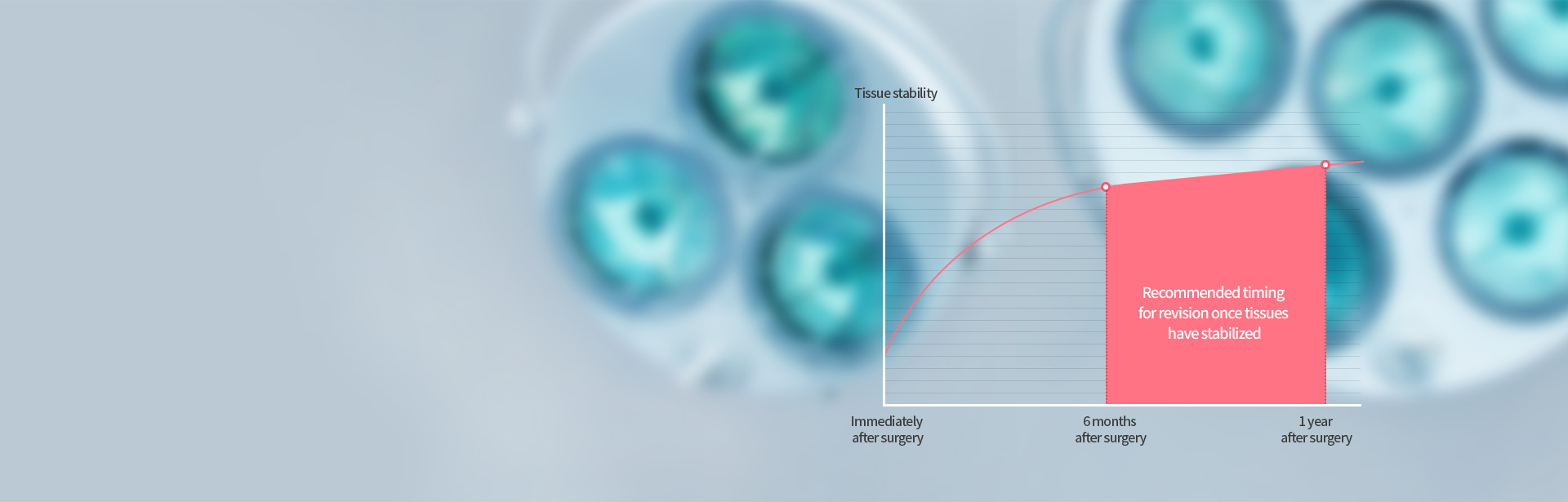
When to Have Revision Rhinoplasty
It is generally best to wait at least six months to one year before revision rhinoplasty. The timing varies with individual healing and the previous technique, so it should be decided in consultation with a specialist. If contracture has developed, the cause of inflammation must be fully eliminated, and tissue tightening must stop and soften sufficiently before surgery to achieve satisfying results.
TOPCLASS
Revision Rhinoplasty: Candidates and Techniques

An Upturned or Shortened Tip
(Contracture)
Inflammation after nasal surgery or repeated revisions can cause the capsule and scar tissue to adhere, pulling the tip upward and hardening the skin.
SOLUTION
The implant is removed, adhesions are released, and the skin is sufficiently stretched before repositioning the tip cartilage to lower the upturned nose.
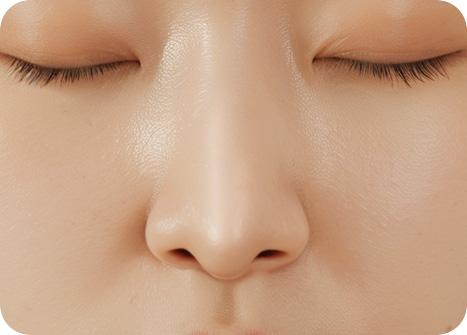
A Drooping Nasal Tip
Weak tip cartilage and a short columella may provide insufficient support, allowing the cartilage to sink over time.
SOLUTION
An autologous rib cartilage strut is grafted, and the alar cartilage is secured to it to elevate the tip.
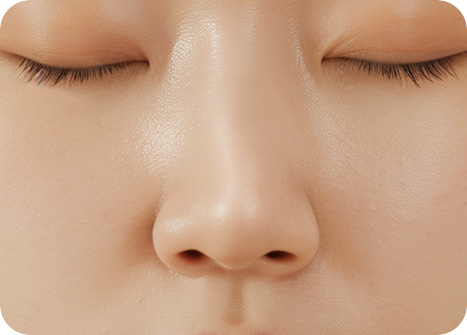
A Crooked-Looking Implant
A nose often appears crooked because the implant's underside does not match the nasal bones, causing it to shift to one side.
SOLUTION
The underside is carefully shaped to fit the nasal bones precisely, then positioned to prevent sideways displacement.
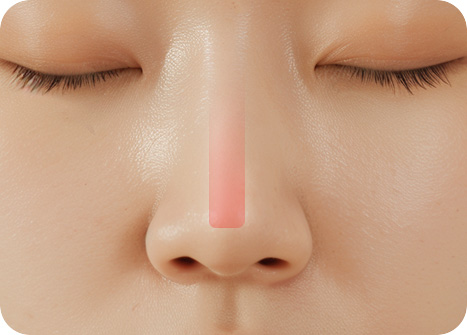
A Visible Implant
The edges of a silicone implant or the shape of cartilage grafted at the tip may show through the skin.
SOLUTION
This may result from thin or sensitive skin or an overly thick implant. It can be improved by choosing an appropriately sized silicone implant or covering it with autologous fascia or dermis.
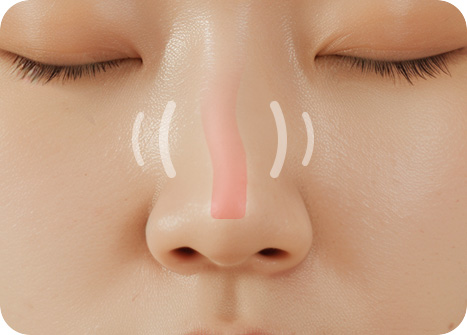
A Mobile Implant
An implant may move if it is not correctly positioned between the nasal bones and periosteum.
SOLUTION
Revision surgery corrects its position or secures it with sutures.
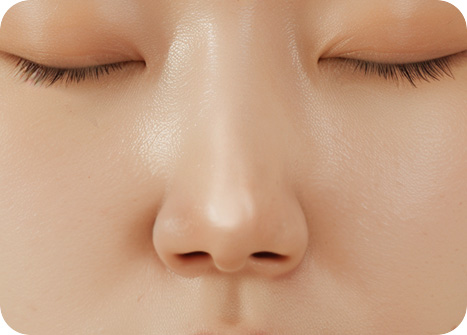
A Pinched Nasal Tip
A pinched tip can result from tying the tip cartilage too tightly or excessively raising a small, thin-skinned tip.
SOLUTION
The tip cartilage can be repositioned or spread using cartilage grafts. Dermal grafts can also reinforce the surrounding tissue.
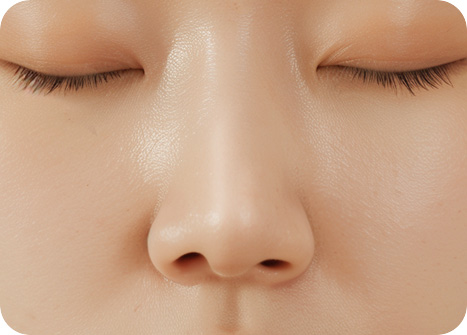
Asymmetrical Nostrils
Improper alar cartilage repositioning, weak septal support, or incorrectly placed tip grafts can distort the nostrils or cause asymmetry.
SOLUTION
The alar cartilage is repositioned and the tip and septal cartilage reinforced to create symmetrical nostrils.
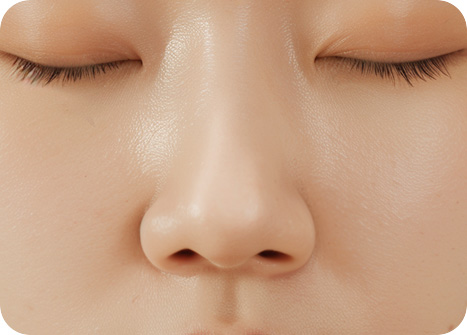
A Bulbous Tip Requiring
Further Correction
A bulbous tip may remain if the cartilage was not narrowed sufficiently or excess subcutaneous fat was not removed.
SOLUTION
The cartilage can be brought together again, or subcutaneous fat removed and the tip raised slightly to refine its shape.
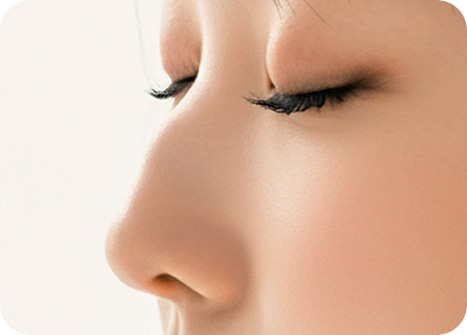
A Remaining Nasal Hump
The hump may have been insufficiently removed
or grown back.
SOLUTION
A pronounced hump is removed again, with an implant restoring the lowered bridge. In milder cases, autologous tissue may be added near the nasal root or above the tip.
Real Revision Rhinoplasty Cases
Revision Rhinoplasty by Condition
Why Do So Many People
Choose TOPCLASS?
Discover the distinctive qualities behind their choice.
Main Phone: +82 2 567 3456
Call us anytime for a friendly consultation.
Clinic Hours
Weekdays
9 : 30 AM ~ 7 : 00 PM
Friday
9 : 30 AM ~ 9 : 00 PM (Evening Hours)
Saturday
9 : 30 AM ~ 4 : 00 PM
* Closed on Sundays and public holidays
Gangnam Station, Exit 11 / Line 2 and Shinbundang Line
Clinic: TOPCLASS Plastic Surgery
5F, Changlim Building, 416 Gangnam-daero, Gangnam-gu, Seoul
Representatives: Yong Hoon Chun, Hyung Joon Kim
Business Registration Number: 220-08-86836
Tel : +82 2 567 3456
email : topclassprs1@gmail.com
COPYRIGHT (C) 2024 TOP CLASS PLASTIC SURGERY.
ALL RIGHTS RESERVED.