TopClass!
Surgery Method
Discover the difference that TOPCLASS Plastic Surgery's expertise and techniques can make.
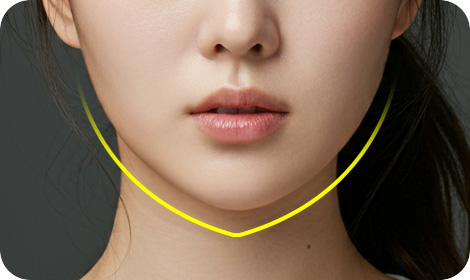
A Narrower Lower Jaw
with a Noticeable Frontal Change
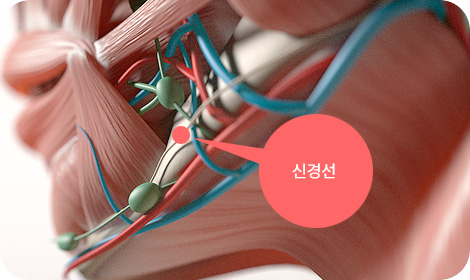
Precise Curved Bone Removal
to Minimize Nerve Injury

Attention to Overall Facial Harmony,
Not Just the Lower Jaw
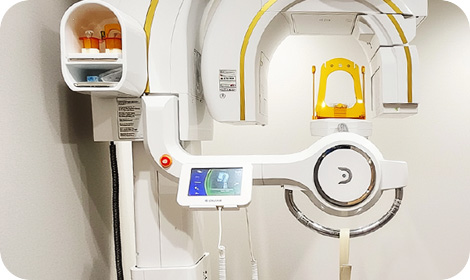
3D CT Maps the Nerve Path
for Safe, Accurate Planning
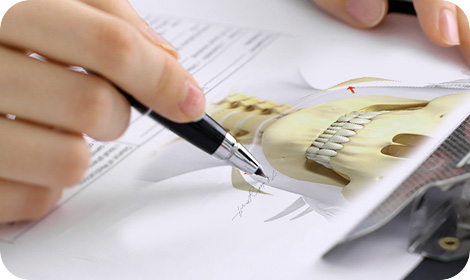
Addresses Length, Width, Thickness, Muscle Bulk and Asymmetry Together
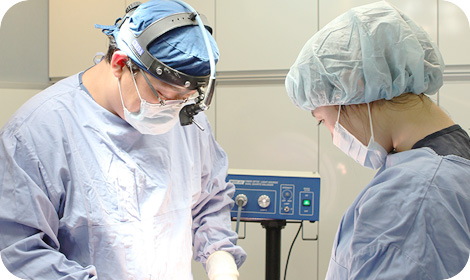
Even After Previous Jaw Reduction,
Revision Can Create a V-Shaped Face
Surgical Techniques
Jaw reduction may combine a T-shaped chin osteotomy, long-curve reduction, cortical bone reduction and radiofrequency masseter nerve treatment to create a slimmer, more refined V-shaped facial contour.
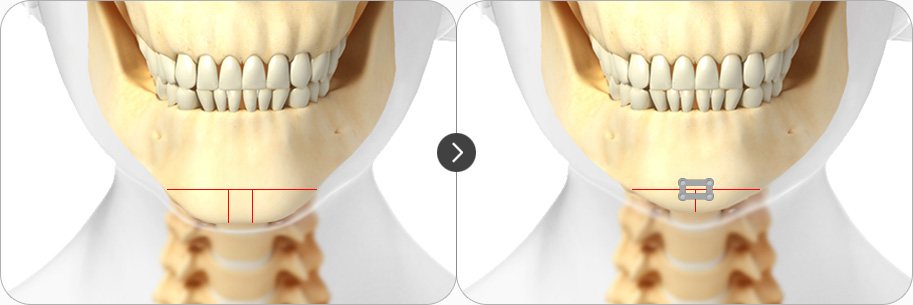
T-Shaped Chin Osteotomy
For a chin that appears broad and large from the front
An advance on conventional U-shaped jaw reduction, this approach combines jaw and chin surgery to narrow both the jaw angles and the chin.
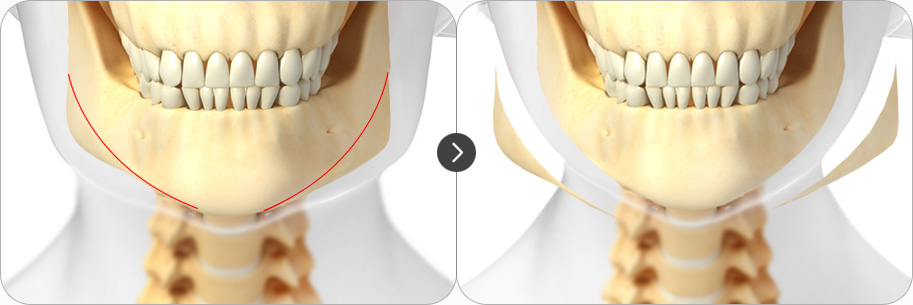
Long-Curve Jaw Reduction
For prominent lower jaw angles on both sides
A continuous reduction runs from the angle beneath the ear toward the chin, helping prevent secondary angles and a double jawline while producing a pronounced improvement in profile.
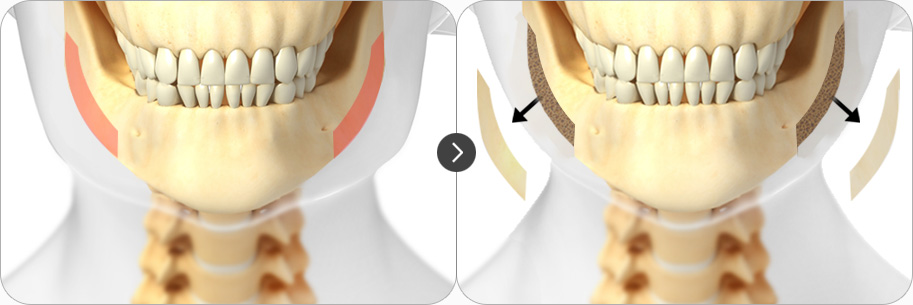
Cortical Bone Reduction
For a thick jawbone or a broad chin angle
Removing the outermost layer of the thick jawbone reduces the bone's overall thickness, creating a clear improvement from the front.
Radiofrequency Masseter Nerve Treatment
For jaw muscles enlarged through chewing activity
When chewing has led to substantial masseter development, radiofrequency energy is delivered through a fine medical needle to reduce muscle size with a semi-permanent effect.
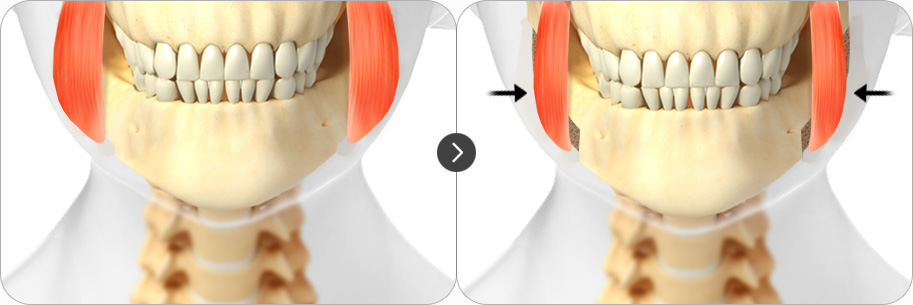
Conventional Jaw Reduction vs. V-Line Jaw Reduction
Explore the differences between conventional and V-Line jaw reduction.
VS
Conventional Jaw Reduction
Effect
Focuses on the jaw angles, offering limited improvement from the front Excessive tissue release may cause damage, secondary angles or instability. Secondary angles are a leading reason for revision jaw surgery.
Precision
Limited surgical experience can make the treatment area difficult to assess accurately - Precise surgery may be difficult
Extent of Correction
Limited Treatment Area - Focuses mainly on removal of the mandibular angle
Bleeding and Swelling
Greater injury to muscle, fat and other tissues increases the likelihood of bleeding Large incisions and extensive dissection can cause more severe, longer-lasting swelling - Longer operating time increases the likelihood of bleeding
Recovery
Slower Recovery
VS
Effect
Precision
Extent of Correction
Bleeding and Swelling
Recovery
VS
VS
V-Line Jaw Reduction
Effect
A Complete V-Line from Every Angle Combines a T-shaped chin osteotomy with jaw reduction to narrow the central chin and precisely reshape the jaw from beneath the ears to the chin, creating a slender, dimensional V-line from the front and side.
Precision
Greater Safety Through Precision 3D CT, a 3D photo-imaging system and virtual measurement simulations allow detailed assessment of bone, soft tissue, nerves and blood vessels before surgery.
Extent of Correction
T-Shaped Chin Osteotomy + Jaw Reduction Long-Curve Reduction + Cortical Bone Reduction The technique varies with the facial structure and bone thickness and can address a broad treatment area.
Bleeding and Swelling
Shorter surgery minimizes tissue damage Small incisions and limited tissue release reduce bleeding, swelling and bruising
Recovery
Faster Recovery
TOPCLASS
Who May Benefit from Jaw Reduction?
01
Those with a broad, thick lower jaw
02
Those whose jawbone makes the face look large and wide
03
Those wanting a slim, oval facial shape
04
Those whose square jaw gives a strong or stern impression
05
Those with prominent jaw angles from the front or side

TOPCLASS
How Jaw Reduction Is Performed
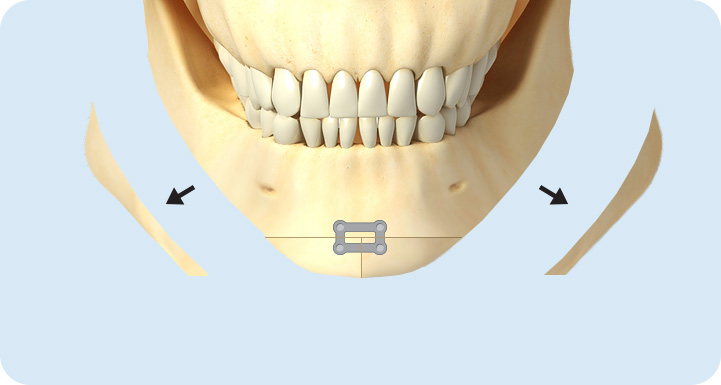
Combining a T-shaped chin osteotomy with jaw reduction produces a visible frontal improvement and a smaller-looking face. The central chin is narrowed first. The angular jawbone from beneath the ears to the chin is then trimmed to match, creating a more natural outline. Compared with conventional jaw reduction, the frontal improvement is more pronounced, and a smooth, refined jawline makes the entire face look smaller and more defined.
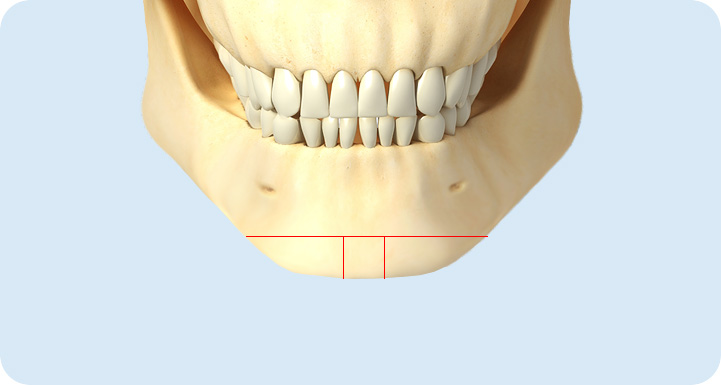
01
Avoiding the nerves, the chin bone
is cut in a T shape.
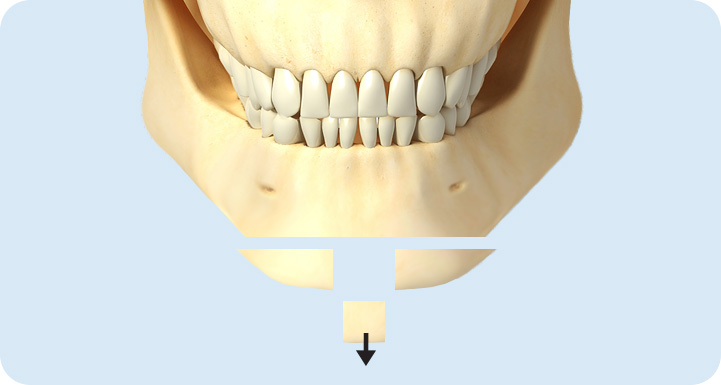
02
The central segment is removed,
and the remaining segments are brought together.
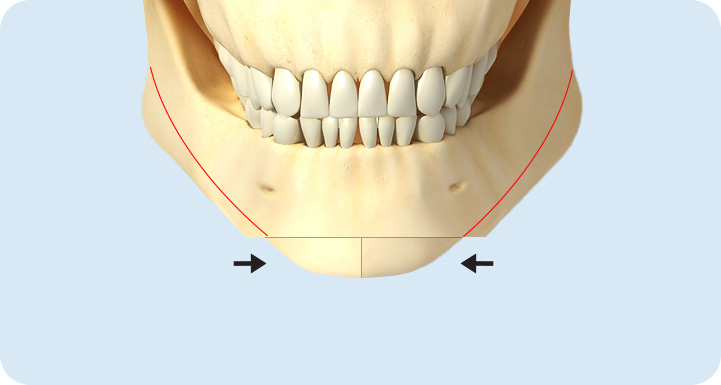
03
The joined bone is secured,
and any protruding bone on either side is trimmed.
04
A smooth V-shaped jawline is created.

Detailed Three-Dimensional Assessment with 3D CT
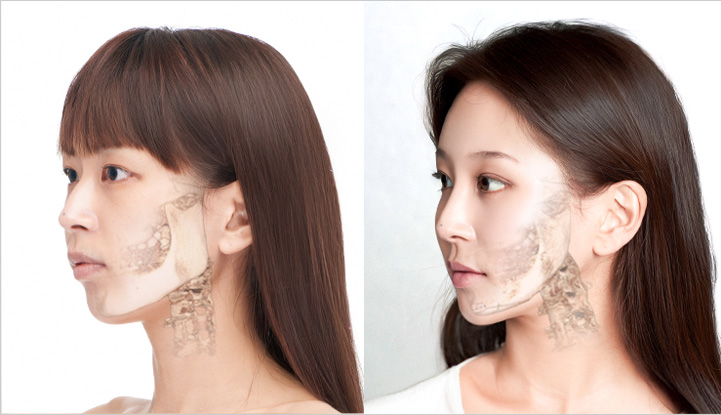
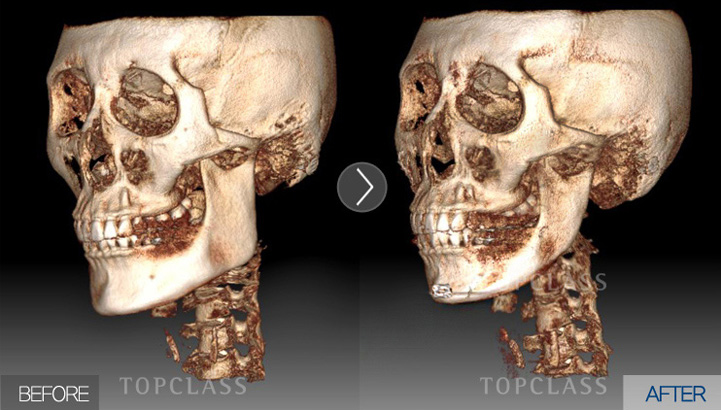
Before surgery, 3D CT is used to examine your facial bones in precise detail. Beyond evaluating visible contours, three-dimensional analysis assesses the bone, muscle, fat and skin. This detailed understanding helps identify the ideal facial contour for your face and supports accurate surgical planning and execution.
Accurate three-dimensional assessment of facial bone structure A detailed surgical plan tailored to your condition



Why Do So Many People
Choose TOPCLASS?
Discover the distinctive qualities behind their choice.
Main Phone: +82 2 567 3456
Call us anytime for a friendly consultation.
Clinic Hours
Weekdays
9 : 30 AM ~ 7 : 00 PM
Friday
9 : 30 AM ~ 9 : 00 PM (Evening Hours)
Saturday
9 : 30 AM ~ 4 : 00 PM
* Closed on Sundays and public holidays
Gangnam Station, Exit 11 / Line 2 and Shinbundang Line

Clinic: TOPCLASS Plastic Surgery
5F, Changlim Building, 416 Gangnam-daero, Gangnam-gu, Seoul
Representatives: Yong Hoon Chun, Hyung Joon Kim
Business Registration Number: 220-08-86836
Tel : +82 2 567 3456
email : topclassprs1@gmail.com
COPYRIGHT (C) 2024 TOP CLASS PLASTIC SURGERY.
ALL RIGHTS RESERVED.